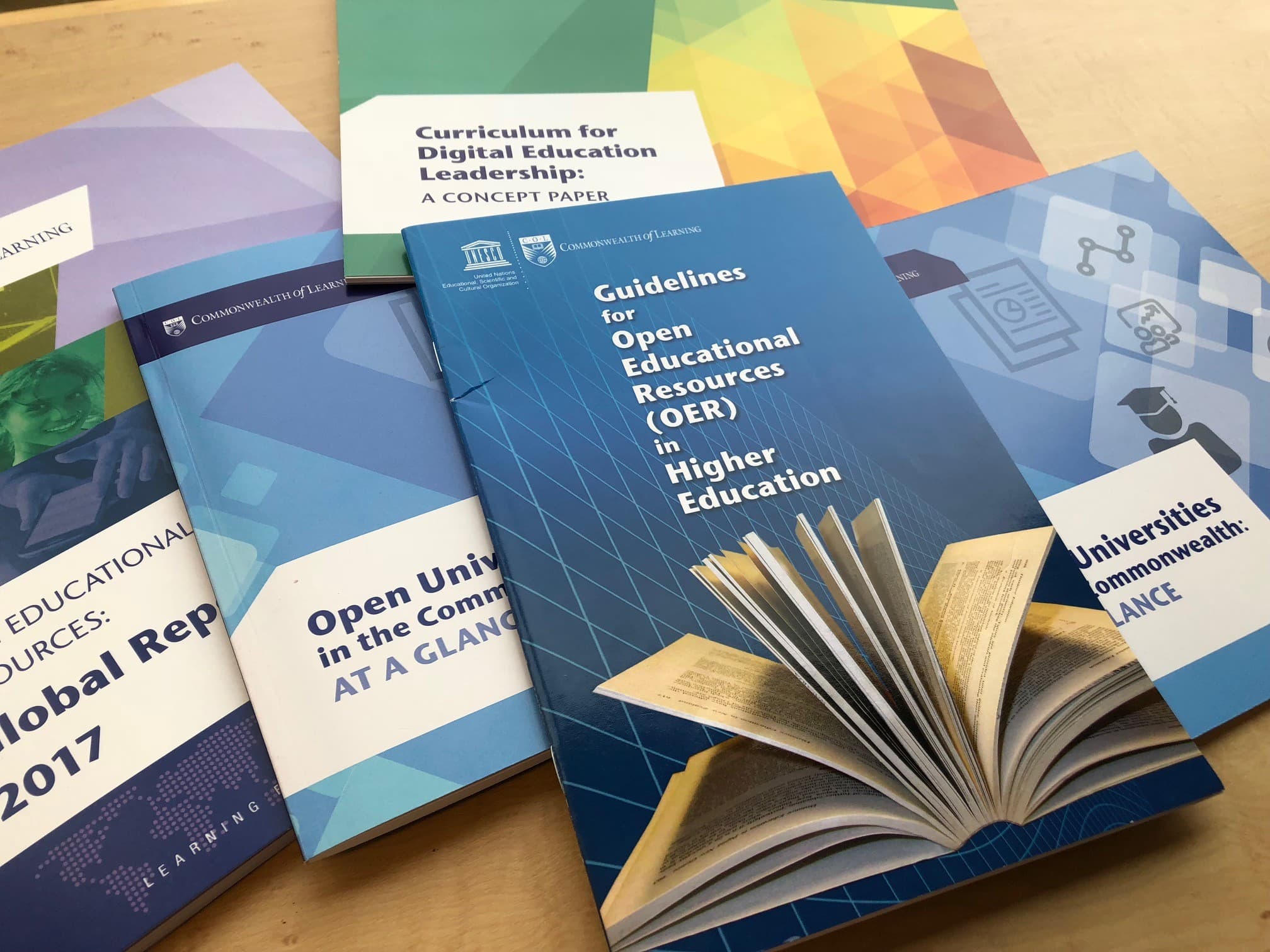
Educational institutions adopting Open Educational Resources face a critical choice: proceed informally with individual faculty initiatives or establish formal institutional policies that signal commitment, create organizational infrastructure, and provide legal clarity around copyright and intellectual property management. Research demonstrates that institutional policies substantially increase OER adoption rates and sustainability. Policies signify institutional leadership support, create psychological safety for faculty to engage with OER without copyright concerns, establish sustainable infrastructure and funding, and provide the necessary governance structures to manage OER at scale.
The stakes are significant. Without formal policies, OER initiatives often remain isolated experiments dependent on individual champions—efforts that collapse when champions leave or funding ceases. Conversely, institutions with articulated OER policies demonstrate dramatically higher faculty engagement, institutional commitment, and long-term sustainability. UNESCO’s 2019 Recommendation on Open Educational Resources explicitly emphasizes that appropriate policy development at national, institutional, and project levels represents a major driving force for successful OER adoption.
Understanding the Policy Development Process
Institutional OER policy development requires deliberate, multi-phase planning rather than rushed implementation. The UNESCO Guidelines on the Development of OER Policies recommend a comprehensive eight-step process:
Phase 1: Establishing Policy Rationale requires conducting a needs assessment to understand institutional challenges, stakeholder perspectives, and opportunities where OER could address identified problems. Questions guiding this phase include: What percentage of students cannot afford required textbooks? What are faculty concerns about current course materials? What institutional strategic goals could OER support? This foundational work ensures policies address genuine institutional needs rather than imposing generic OER frameworks disconnected from local context.
Phase 2: Formulating a Vision Statement articulates how OER aligns with institutional mission and strategic priorities, particularly connections to Sustainable Development Goal 4 (SDG 4) on quality education. The vision statement should specify whether the institution seeks to adopt existing OER, develop new materials, support pedagogical innovation through open educational practices, or pursue some combination.
Phase 3: Framing the OER Policy involves defining the policy’s scope and scale—whether it applies institutionally or system-wide, which educational levels it covers, and which stakeholder groups (faculty, students, adjuncts, instructional designers) fall within its purview. Policy scope should address whether it covers all coursework or focuses on specific high-enrollment, high-cost disciplines.
Phase 4: Developing the Policy Framework creates the actual policy document with specific components addressing governance, intellectual property, quality assurance, implementation processes, and sustainability.
Phase 5: Determining the Implementation Strategy establishes how the policy will be operationalized, including resource allocation, professional development, technical support, change management processes, and timelines.
Phase 6: Establishing Governance Structures clarifies organizational responsibility, decision-making authority, stakeholder roles, and coordination mechanisms, particularly for multi-institution systems requiring alignment between institutional and system-level policies.
Phase 7: Launching and Communicating the Policy involves strategic communication to build understanding, address concerns, and establish the policy as a lived institutional priority rather than a paper document.
Phase 8: Monitoring, Evaluation, and Revision establishes metrics for tracking OER adoption, effectiveness, cost savings, and student outcomes, with regular policy review cycles (typically every 3-5 years) to incorporate learning and adjust to changing context.
Essential Components of Institutional OER Policies
Research synthesizing existing institutional policies identifies consistent components appearing in effective OER policy frameworks:
A Statement of Purpose motivating policy creation by articulating the institutional problem the policy addresses. For example: “This institution adopts an OER policy to reduce barriers to student access, lower course costs, and enable curricular innovation through quality openly licensed educational materials”.
Definitions of Key Terms including what the institution means by “Open Educational Resources,” “creative commons,” “intellectual property,” “adaptation,” and related concepts. Providing clear definitions ensures consistent interpretation across the institution and prevents misunderstandings.
Policy Scope and Applicability specifying to whom the policy applies (faculty, adjuncts, students, librarians, instructional designers), which educational levels it covers (K-12, undergraduate, graduate, professional), and which types of courses or disciplines it addresses.
Statements on Copyright and Licensing clarifying the intellectual property framework the institution adopts. Many institutions mandate use of Creative Commons Attribution (CC BY) licensing—the most permissive Creative Commons license granting full reuse rights provided original authors receive attribution. CC BY is particularly appropriate for educational materials because it enables rapid adaptation and remixing while maintaining attribution accountability.
Quality Assurance and Review Processes describing how OER will be vetted before adoption or recommendation, establishing quality standards aligned to institutional pedagogical approaches, and outlining evaluation criteria. Many institutions specify that OER undergo peer review before official institutional recommendation, paralleling traditional academic quality assurance processes.
Intellectual Property Rights Management clarifying who owns materials created under various circumstances—for instance, specifying that faculty own materials they create using their own time and resources, while institutions own materials developed through grant funding or institutional support. This clarity prevents disputes and enables efficient licensing decisions.
Professional Development and Support Provisions detailing what training, mentoring, and technical assistance institutions provide to faculty adopting or creating OER. Commitment to support signals institutional seriousness and addresses identified barriers around time and expertise.
Incentive Programs describing how institutions reward OER creation, adaptation, and adoption. Common models include monetary stipends ($500-$30,000), course releases, promotional recognition, tenure and promotion consideration, and travel funding for professional development.
Procedures and Responsibility Statements clearly delineating who is responsible for specific OER functions—who discovers and evaluates OER, who provides technical support for adaptation, who manages institutional repositories, who oversees quality assurance.
Technical Format and Accessibility Standards specifying that OER must meet Web Content Accessibility Guidelines (WCAG) 2.1 Level AA standards ensuring accessibility for students with disabilities.
Liability Disclaimers clarifying institutional and individual liability regarding third-party copyright claims, appropriate use of adapted materials, and academic integrity in OER adoption.
Integration With Broader Institutional Policies
Effective OER policies do not exist in isolation but integrate with related institutional frameworks. Alignment with related policies strengthens both the OER policy and institutional coherence:
Strategic Planning Documents should reference OER as a mechanism for achieving institutional goals around affordability, access, and pedagogical innovation.
Intellectual Property Policies must clarify how OER licensing decisions relate to broader institutional IP management, particularly regarding commercialization potential and revenue sharing.
Tenure and Promotion Guidelines should explicitly recognize OER creation, adaptation, and adoption as scholarly contributions worthy of consideration in tenure decisions. Research shows that updating tenure and promotion criteria significantly influences faculty adoption, particularly for tenure-track faculty.
Faculty Workload Models should account for OER development as legitimate academic work, providing course releases or reassigned duties for significant OER projects.
Quality Assurance Policies should describe how institutional quality review processes apply to OER, integrating OER evaluation with existing pedagogical assessment frameworks.
Data Privacy and Learning Management System Policies should address how OER stored in institutional systems comply with Family Educational Rights and Privacy Act (FERPA), Children’s Online Privacy Protection Act (COPPA), and related privacy legislation.
Addressing Copyright and Licensing in Institutional Policies
A critical component of institutional OER policies involves establishing clear frameworks for copyright management, particularly regarding third-party content embedded in OER:
Clarifying Ownership requires institutions to establish who owns materials created in various circumstances—faculty ownership when materials are created outside employment, institutional ownership when developed through funded grants or reassigned duty, or co-ownership when students or collaborators contribute. Clarity enables efficient licensing decisions and prevents future disputes.
Verifying Licensing Authority requires confirming that individuals licensing materials as OER actually possess legal authority to do so. For institutional OER created through grants or funded projects, institutions must own copyright before imposing Creative Commons licensing requirements. Similarly, individuals creating derivative works must own or have permission for all third-party content incorporated.
Managing Third-Party Content involves establishing protocols for materials incorporating copyrighted images, videos, music, quotations, or other third-party elements. Policies should require either clearing permissions from copyright holders, using materials already available under open licenses, using public domain materials, or relying on fair use doctrine where applicable. Critically, policies should prohibit incorporating copyrighted material without either rights clearance or documented fair use analysis.
Establishing Attribution Standards should specify how institutions require attribution of original authors, sources, and previous versions when creating derivative works. While legal attribution is not required for public domain or CC BY materials (which grant full reuse rights), ethical attribution practices strengthen institutional credibility and academic integrity culture.
Documentation and Compliance Mechanisms should establish processes for verifying that OER posted as institutional resources comply with all copyright, licensing, and accessibility requirements. Many institutions require OER to pass copyright review before posting to institutional repositories.
Faculty Incentive Structures: Making OER Work Rewarding
Research on faculty adoption reveals that incentive programs substantially influence faculty engagement with OER, though no universal “one size fits all” model exists. Faculty incentive preferences vary by discipline, career stage, and individual circumstances, requiring diversified approaches.
Monetary Stipends represent the most straightforward incentive model, typically ranging from $500 for simple adoption to $30,000+ for developing entirely new OER. However, research suggests that modest stipends ($1,000-$5,000) prove adequate for adaptation projects while more substantial compensation ($10,000-$30,000) is appropriate for creation efforts.
Critically, stipend adequacy depends on timing and opportunity cost. Faculty survey research at Rutgers University found that even well-compensated faculty value adequate time allocation more than additional monetary compensation. Several faculty respondents indicated that course releases allowing them to dedicate full attention to OER development would be more valuable than additional stipends. Similarly, adjunct faculty—who often lack course release opportunities—indicated that even modest stipends provide meaningful recognition for OER work.
Professional Development Support involving conference travel funds, training workshops, and mentoring relationships represent alternative or complementary incentives. Survey respondents particularly valued support for learning communities around OER development, suggesting that collegial engagement and knowledge-sharing may motivate participation beyond financial incentives.
Tenure and Promotion Recognition offers longer-term career benefits, particularly for tenure-track faculty. Universities like the University of British Columbia have revised tenure and promotion guidelines to recognize OER creation as scholarly contribution. While promotion considerations do not influence all faculty populations (adjuncts, term appointees), this leverage point significantly affects decision-making among tenure-eligible faculty.
Institutional Recognition and Awards including formal acknowledgment of faculty contributions to affordability initiatives, institutional awards for OER excellence, and public celebration of faculty accomplishments establish cultural signals that OER work is valued.
Research suggests that combining monetary incentives with institutional support, professional development, and recognition produces more sustained engagement than any single incentive type. Similarly, institutions must ensure that incentive programs themselves are sustainable—evidence shows that grant-dependent OER initiatives frequently collapse after external funding ends.
Implementation Challenges: Managing Resistance and Building Buy-In
Implementation research reveals consistent barriers to OER policy adoption and institutionalization:
Scarce Resources including insufficient budget, limited staffing, and competing institutional demands consistently emerge as the primary barrier, identified by 86% of organizations attempting large-scale change initiatives. For OER initiatives specifically, resource constraints manifest as insufficient librarian support for OER discovery and evaluation, inadequate technical expertise for repository management, and limited capacity for faculty training.
Stakeholder Resistance typically driven by quality skepticism, copyright concerns, or preference for familiar materials affects approximately 49% of organizational change initiatives. Faculty particularly express concern that “free” materials are lower quality, that using OER signals lower academic standards, and that adopting OER requires uncompensated additional work.
Leadership Instability affects approximately 27% of change initiatives, particularly problematic for OER programs where success depends on sustained advocacy from champions. When OER champions (librarians, faculty leaders, administrators) leave institutions, momentum frequently dissipates and programs decline.
Competing Demands involving multiple simultaneous change initiatives (curriculum redesigns, new learning management systems, accreditation requirements) affect 40% of organizations. Educational institutions constantly juggle multiple priorities, and without explicit prioritization signals, OER work competes unsuccessfully with more immediate demands.
Effective implementation addressing these barriers typically employs several strategies:
Establishing Strong Sponsorship and Leadership Support involves visible commitment from senior leaders—presidents, provosts, deans—who communicate priority, allocate resources, and remove obstacles. Leadership visibility signals importance and empowers mid-level coordinators to advance OER work.
Creating Clear Governance and Decision Structures including designated change councils, clear responsibility assignments (RACI matrices), and regular progress monitoring prevents confusion about priorities and decision authority.
Involving Impacted Stakeholders in Policy Development through pilots, feedback loops, and co-creation ensures that policies address real concerns and build credibility. Faculty and librarians who feel heard during policy development become advocates for implementation.
Providing Adequate Training and Support with task-level guidance, peer mentoring, and ongoing troubleshooting enables faculty to successfully integrate OER into their work. Many faculty resist OER adoption when support is inadequate; removing this barrier dramatically improves adoption.
Celebrating Early Wins and Sharing Results creates positive momentum and demonstrates that OER adoption produces real benefits—cost savings for students, improved pedagogy, reduced faculty workload.
Building Community and Peer Networks enables faculty to learn from peers already adopting OER, reducing perceived risk and accelerating adoption. Peer influence often proves more powerful than institutional mandates.
Monitoring Progress and Making Visible Adjustments based on feedback demonstrates institutional responsiveness and maintains momentum through multiple implementation phases.
Monitoring, Evaluation, and Sustainability
Institutional OER policies require monitoring and evaluation mechanisms ensuring that policies achieve intended outcomes while identifying improvement opportunities. The UNESCO 2019 Recommendation on OER explicitly emphasizes that member states should “monitor policies and mechanisms related to OER” using systematic evaluation frameworks.
Key Metrics for Monitoring OER Implementation should include:
- Adoption rates: Percentage of faculty adopting OER; number of courses using OER; enrollment in OER courses (tracked annually to assess growth trajectories)
- OER creation and adaptation: Number of new OER developed; adaptations completed; materials updated; institutional OER repository growth
- Cost savings: Total estimated student savings from OER adoption; per-student cost reduction in OER courses compared to traditional textbooks
- Accessibility compliance: Percentage of institutional OER meeting WCAG 2.1 Level AA standards; accessibility issues identified and addressed
- Quality metrics: Peer reviews completed; quality ratings received; accessibility reviews conducted
- Faculty and student satisfaction: Faculty perceptions of OER quality and effectiveness; student satisfaction with OER materials; learning outcome comparisons between OER and traditional materials
- Equity and inclusion: OER adoption rates across different disciplines; adoption patterns serving diverse student populations; impacts on enrollment and success for underrepresented students
- Sustainability indicators: Institutional budget dedicated to OER; sustainability of incentive programs; institutional commitment beyond grant funding
Monitoring Implementation Outcomes requires distinguishing between implementation-specific metrics (is the policy being implemented as intended?) and ultimate outcome metrics (are we achieving our goals?). For example, an OER policy might aim to increase adoption from 5% to 25% of faculty within three years; monitoring whether adoption reaches target milestones enables mid-course corrections.
Quality Assurance Integration should embed regular evaluation of OER quality into institutional review cycles, not just one-time peer review. Institutions should establish annual or biennial assessment processes updating quality ratings as materials evolve.
Long-Term Sustainability Planning recognizing that OER initiatives require ongoing commitment prevents programs from collapsing after initial grant funding or champion departures. Sustainable OER programs integrate structured spending on OER practices into annual institutional budgets, moving beyond procurement to include ongoing adaptation, improvement, and curation.
Building Copyright Compliance Into Operations
Effective institutional OER policies establish operational mechanisms ensuring that copyright and accessibility compliance occurs systematically rather than relying on individual effort or luck:
OER Approval Workflows should require copyright review and documentation before materials receive institutional endorsement or posting to institutional repositories. Many institutions employ librarians to conduct this review, ensuring consistency and expertise.
Templates and Guidelines for OER Creators providing clear instructions on how to identify third-party content, verify licensing authority, and complete necessary rights clearance reduce errors and ensure systematic compliance.
Accessible Repositories and Tracking Systems that record copyright status, licensing information, and accessibility compliance history enable institutional monitoring and rapid identification of compliance gaps.
Regular Audits of institutional OER repositories identifying materials requiring copyright review, accessibility updates, or licensing clarification ensure ongoing compliance as standards and institutional policies evolve.
UNESCO’s 2019 Recommendation on OER: Alignment With International Guidelines
Institutions developing OER policies strengthen these policies by aligning them with UNESCO’s 2019 Recommendation on OER, the first international normative instrument providing global guidance on OER policy development. The Recommendation emphasizes five action areas:
Building Stakeholder Capacity to create, access, reuse, adapt, and redistribute OER through professional development, training, and resource provision.
Developing Supportive Policy at national and institutional levels that incentivizes OER development, adoption, and sustainable infrastructure.
Encouraging Inclusive and Equitable Quality OER through quality assurance mechanisms ensuring OER meet accessibility standards and serve diverse learner populations.
Nurturing Sustainability Models through diversified funding, business models, and institutional commitment ensuring OER initiatives survive beyond initial grant funding.
Facilitating International Cooperation enabling knowledge sharing, collaborative development, and resource sharing across institutional and national boundaries.
Many progressive institutions now structure OER policies explicitly referencing UNESCO alignment, signaling commitment to international quality standards and best practices.
Conclusion: Toward Comprehensive Institutional OER Frameworks
Building effective institutional OER policies requires substantial deliberation, stakeholder engagement, and integrated planning addressing copyright compliance, intellectual property management, faculty incentives, quality assurance, and long-term sustainability. Rather than adopting generic templates, institutions achieve greatest success by grounding policies in local context—responding to specific institutional challenges, aligning with existing governance structures, and building policies through participatory processes creating stakeholder buy-in.
The payoff for institutional effort is substantial: policies that signal leadership commitment, clarify copyright frameworks, establish sustainable funding and infrastructure, and provide faculty support generate significantly higher adoption rates, improved long-term sustainability, and greater student benefit than informal, individually-driven OER initiatives. When combined with systematic monitoring, regular policy review, and integration with related institutional initiatives, comprehensive OER policies transform OER from marginal experiments into strategic institutional practices supporting core educational missions around access, affordability, and pedagogical innovation.